As we navigate the academic landscape of the term, it brings me great joy to share the multifaceted experiences of our Lower Sixth IB students. In this blog, I reflect on two pivotal elements that define the essence of the IB education – the recent Theory of Knowledge (ToK) trip and the collaborative Group 4 Science project.
Theory of Knowledge (ToK) Trip: Nurturing Inquisitive Minds
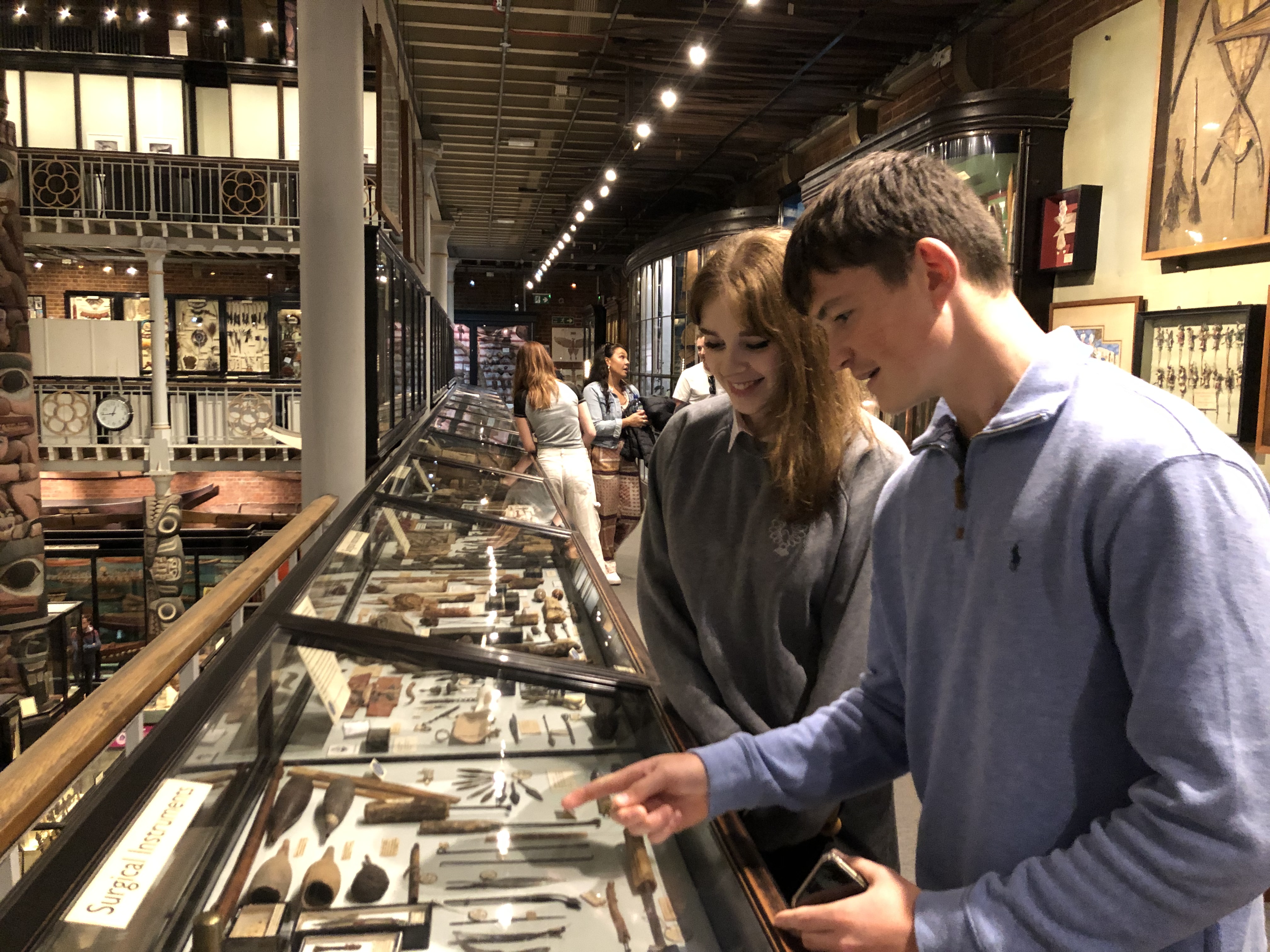
On Friday, 29th September, our Lower Sixth IB cohort embarked on a fascinating journey to the Pitt Rivers Museum and New College, Oxford, as part of our ToK curriculum. This expedition was more than a field trip; it was a deep dive into critical thinking, questioning assumptions, and exploring the nature of knowledge.
Mel Rowntree, the museum’s Education Officer, led discussions on coloniality and the impact of colonialism on first-nation groups. Students were prompted to consider the potential ‘death’ of knowledge systems and deduce information about communities from cultural artefacts. This immersive experience provided valuable insights into the complexity of knowledge acquisition and the influence of power dynamics.
The stroll through Oxford’s historic streets, visits to the Bodleian Library and New College, all underscored the enduring value placed on academic scholarship and interdisciplinary discourse. It was a day of not just learning but also of expanding horizons, sparking critical thinking that will shape our students’ intellectual pursuits in the future.
Group 4 Science Project: Bridging Disciplines for a Sustainable Future
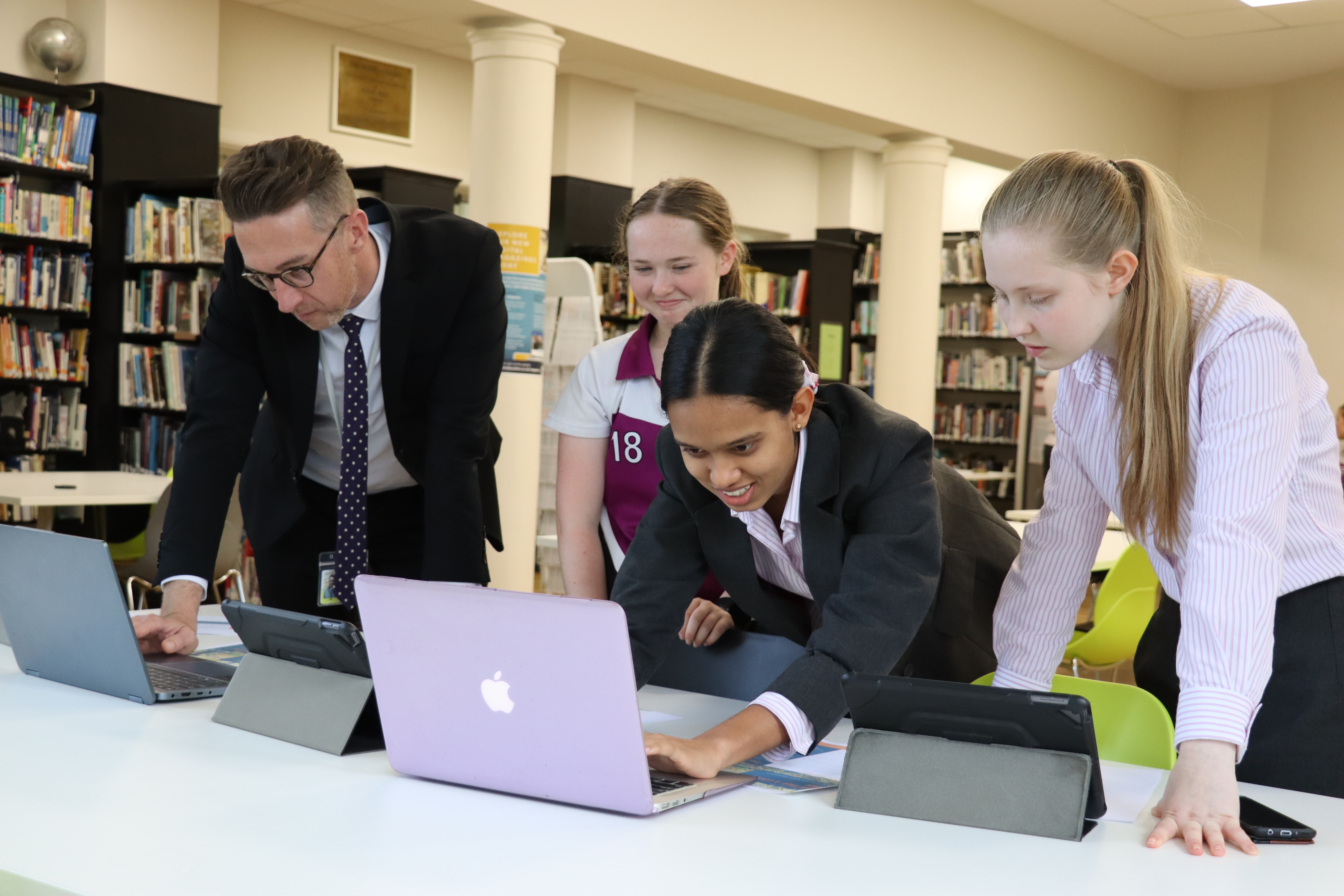
Prior to the half-term break, our Lower Sixth IB students engaged in the collaborative Group 4 Science project—a cornerstone of the IB Diploma Programme. This project encapsulates the essence of the IB approach, encouraging students to work together across scientific disciplines to analyse a common topic or problem.
This year’s theme focused on the National recovery plan for a species in decline. Students tackled complex challenges, from saving the Stout Dart Moth and addressing the surprising decline of puffins to exploring the endangered world of coral reefs and devising solutions for the Nathusius Pipistrelle.
For instance, Deeksha Dinesh’s team developed a comprehensive strategy to save the Stout Dart Moth, involving biology, chemistry, physics, and computer science. Evie Hayward’s group addressed the decline of puffins, linking sciences to solutions that considered the broader environmental impact. Serena Jacob’s collaborative project explored the endangerment of coral reefs, emphasising the urgency of action. Olivia Davies and her team crafted innovative solutions for the Nathusius Pipistrelle, blending scientific knowledge with a commitment to environmental conservation.
These Group 4 projects showcase the IB Programme’s ability to foster not only scientific inquiry but also interdisciplinary collaboration, problem-solving, and effective communication. Students didn’t just learn about science; they applied their knowledge to real-world challenges, reflecting the program’s commitment to holistic education.
Balancing Act: The Merits of the IB Diploma Programme
The Theory of Knowledge trip and the Group 4 Science project are emblematic of the balanced and holistic education offered by the IB Diploma Programme. The ToK trip hones critical thinking and broadens perspectives, while the Group 4 project develops collaboration, application of knowledge, and an understanding of real-world issues.
The IB Diploma Programme isn’t just about exams; it’s about equipping our students with the skills, knowledge, and mindset needed to thrive in an ever-evolving world.
In the coming months, we look forward to more exciting projects and experiences that will further shape our students into informed, engaged, and globally aware individuals.
 BGS Deputy Head's Blog